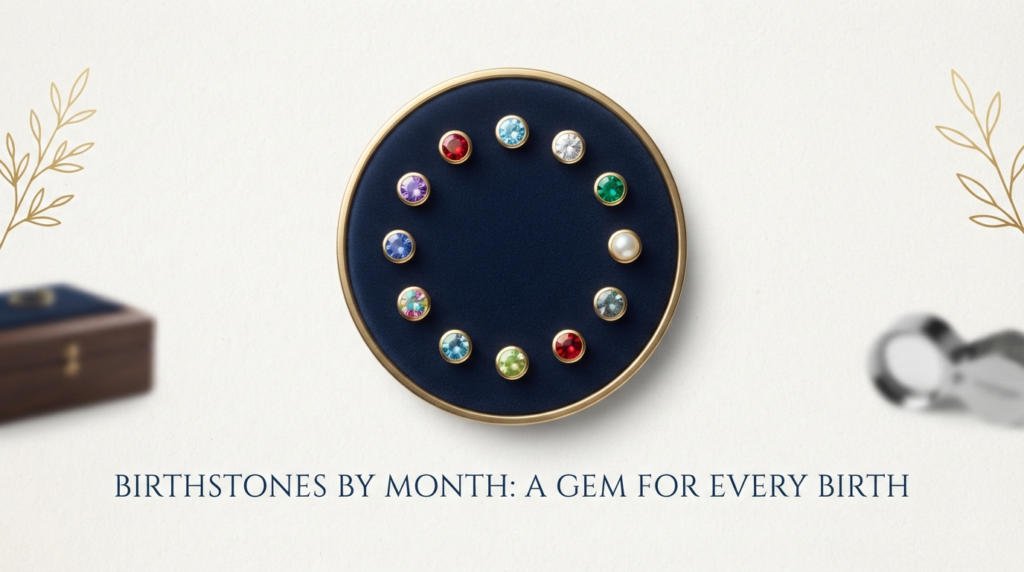
Long before gemstones were graded, certified, or sold under glass, they were believed to carry the energy of the month in which a person was born. The tradition traces back to the twelve stones described in the biblical Breastplate of Aaron, and later to ancient astrologers who linked each stone to a month and a meaning. The modern list most jewelers use today was standardized in 1912 by the National Association of Jewelers (now Jewelers of America), and updated as recently as 2016 to add new alternate stones.
Here is the story behind each one — along with what it has come to mean.
January — Garnet
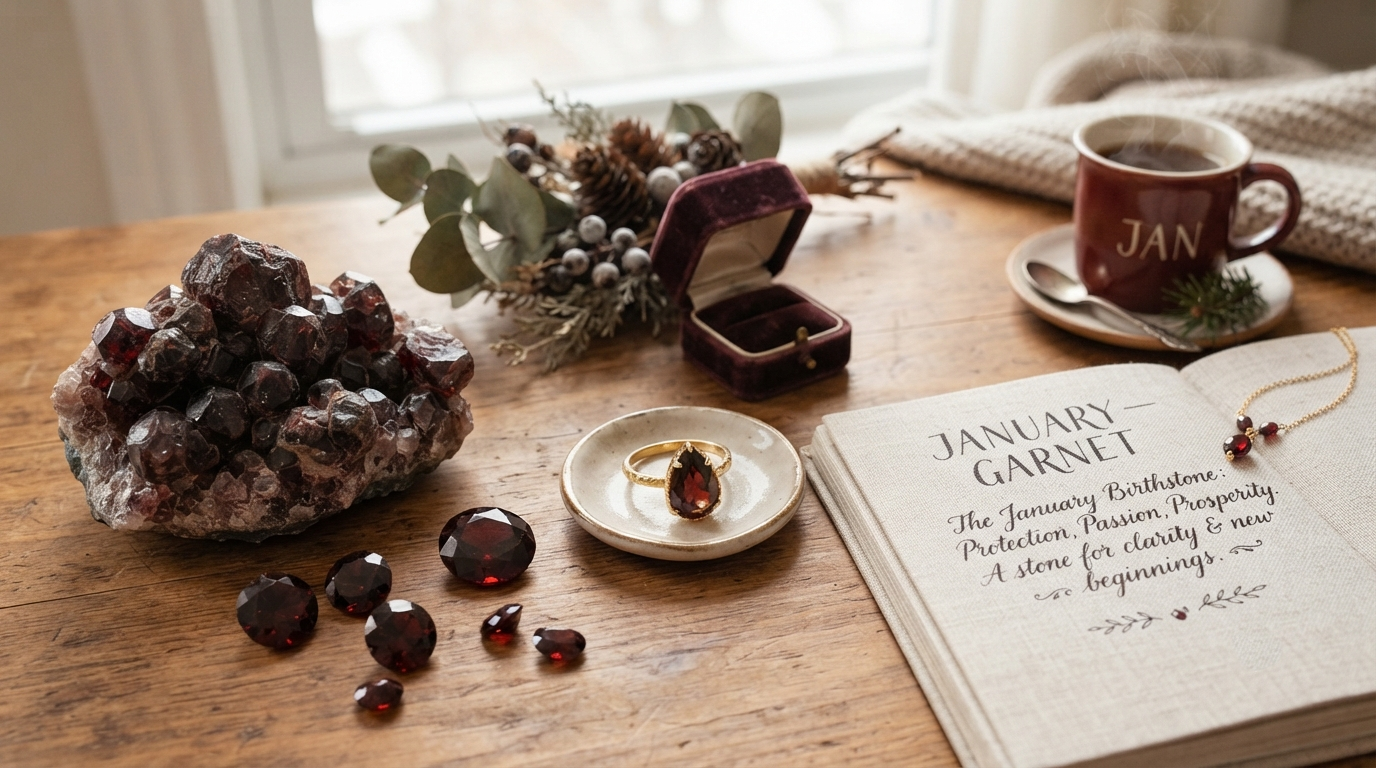
Garnet takes its name from the Latin granatum, meaning “seed,” a nod to its resemblance to the deep red seeds of a pomegranate. While deep red is the most familiar shade, garnet actually occurs in nearly every color except blue, from vivid greens (tsavorite, demantoid) to fiery oranges (spessartite), giving it far more range than most people realize.
Historically mined across India, Sri Lanka, and East Africa, garnet has long been worn as a stone of protection for travelers.
Garnet Stone Meaning and Symbolism
Garnet has been carried as a protective talisman since antiquity, worn by travelers and warriors who believed it guarded against harm on long journeys. Its deep red color led many cultures to associate it with the life force itself — vitality, strength, and courage. In friendship and love, garnet is traditionally exchanged as a symbol of trust and lasting devotion, which is part of why it opens the birthstone calendar as the stone of new beginnings.
February — Amethyst
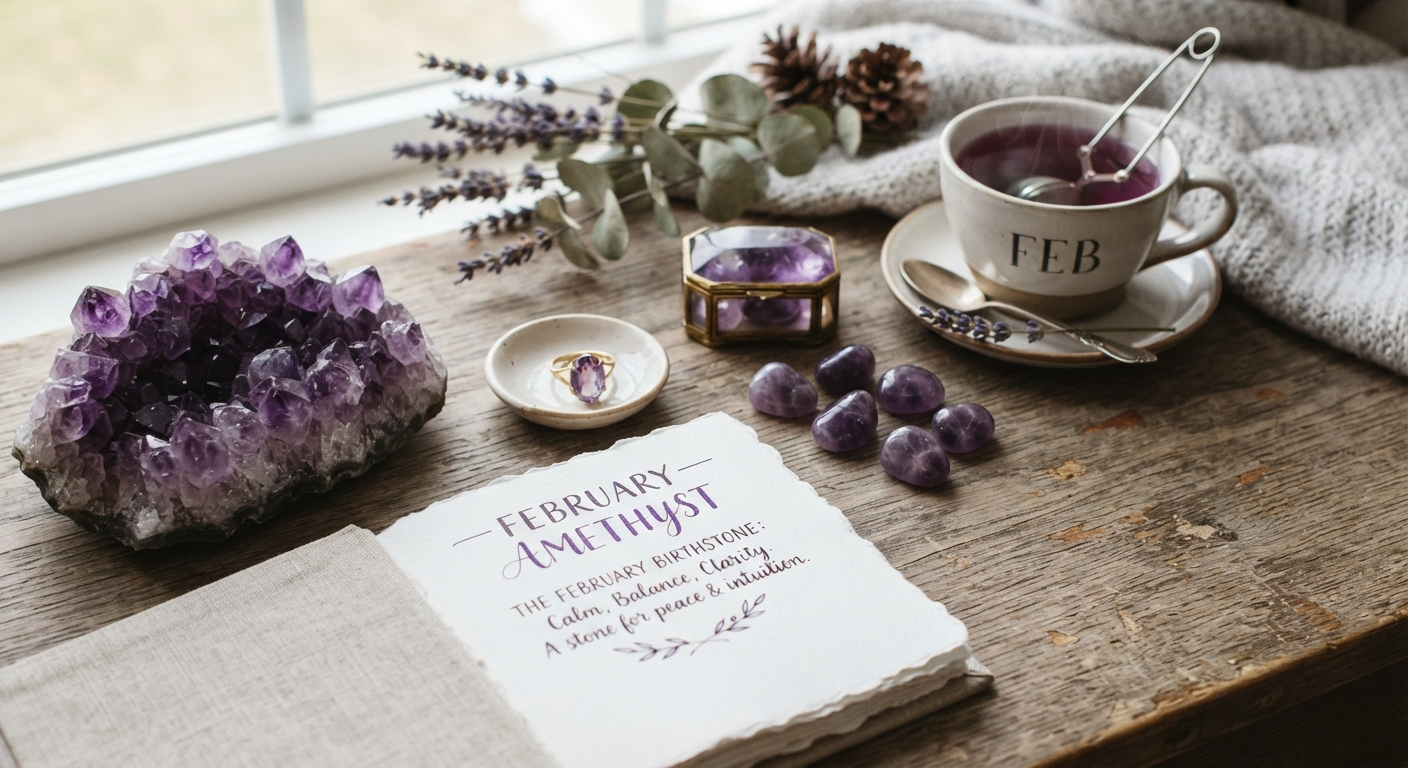
Amethyst gets its name from the Greek amethystos, meaning “not intoxicated.” Ancient Greeks believed the purple quartz could ward off the effects of wine, and drinking vessels were carved from it for exactly that purpose.
The finest amethyst today comes from Brazil, Uruguay, and Zambia, prized for its rich violet hue.
Amethyst Stone Meaning and Symbolism
Amethyst has long been regarded as a stone of clarity and sobriety, believed to calm the mind and keep the wearer level-headed under pressure. Its association with royalty and the clergy — it was once reserved for bishops’ rings and crowns — also gave it a reputation for spiritual wisdom and dignity. Today it’s most often worn as a symbol of inner peace, balance, and protection from negative thinking.
March — Aquamarine & Bloodstone
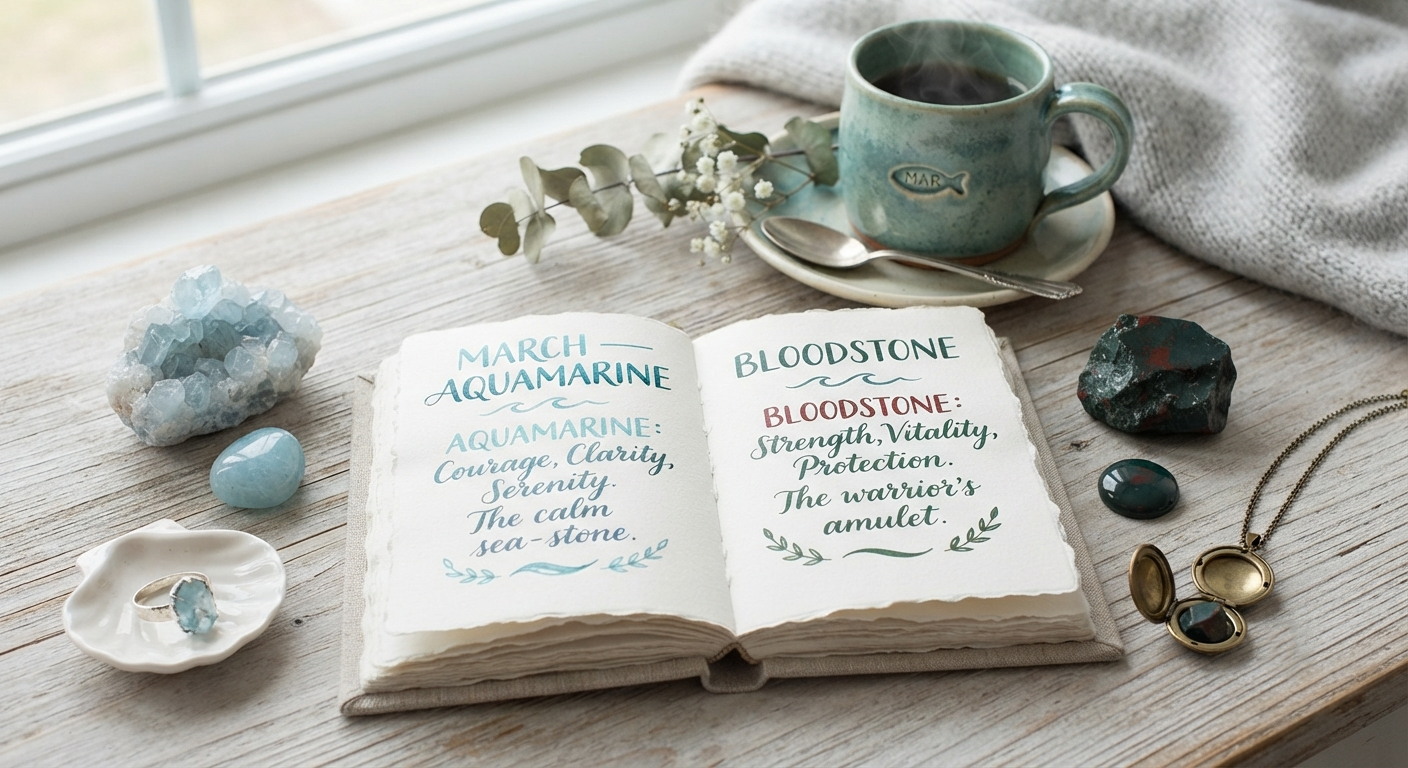
Aquamarine draws its name from the Latin aqua marina, “water of the sea,” describing its pale blue-to-teal color. Sailors once carried aquamarine as a talisman for safe voyages, believing it calmed rough waters.
Its March counterpart, bloodstone, is a dark green jasper flecked with red inclusions resembling drops of blood, long associated in medieval Europe with courage and vitality. Aquamarine’s major sources today include Brazil, Madagascar, and Nigeria.
Aquamarine & Bloodstone Meaning and Symbolism
Aquamarine’s connection to the sea made it a symbol of calm, courage, and safe passage — sailors believed it could soothe stormy waters and protect against seasickness. Bloodstone carries a very different symbolism: its red flecks were linked in early Christian legend to the blood of martyrs, giving it a reputation for courage, resilience, and self-sacrifice. Together, the two March stones represent the balance between tranquility and inner strength.
April — Diamond
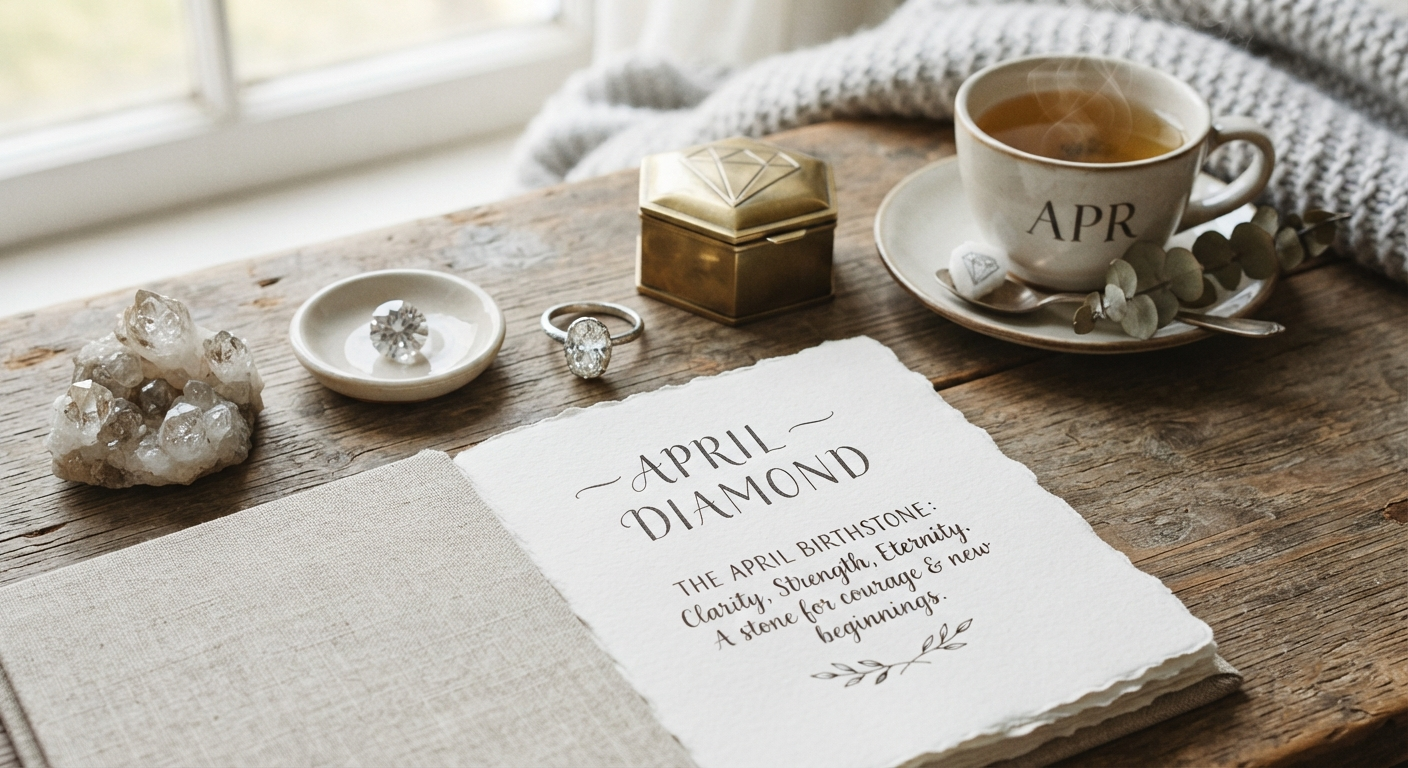
The word diamond comes from the Greek adamas, meaning “unbreakable” — a reference to its position as the hardest known natural material. Its brilliance under light, unmatched by nearly any other gem, has made it the enduring symbol of purity and unbreakable love.
Historic diamonds trace back to India’s Golconda mines, while today’s major sources include Botswana, Russia, and Canada.
Diamond Stone Meaning and Symbolism
Diamond’s hardness has made it the universal symbol of strength, permanence, and incorruptibility across nearly every culture that has encountered it. Its brilliance and clarity are associated with truth and purity of intention, which is part of why it became the gem of choice for marriage and eternal commitment. As April’s birthstone, it’s worn as a reminder of resilience — the idea that pressure and time can produce something unbreakable.
May — Emerald
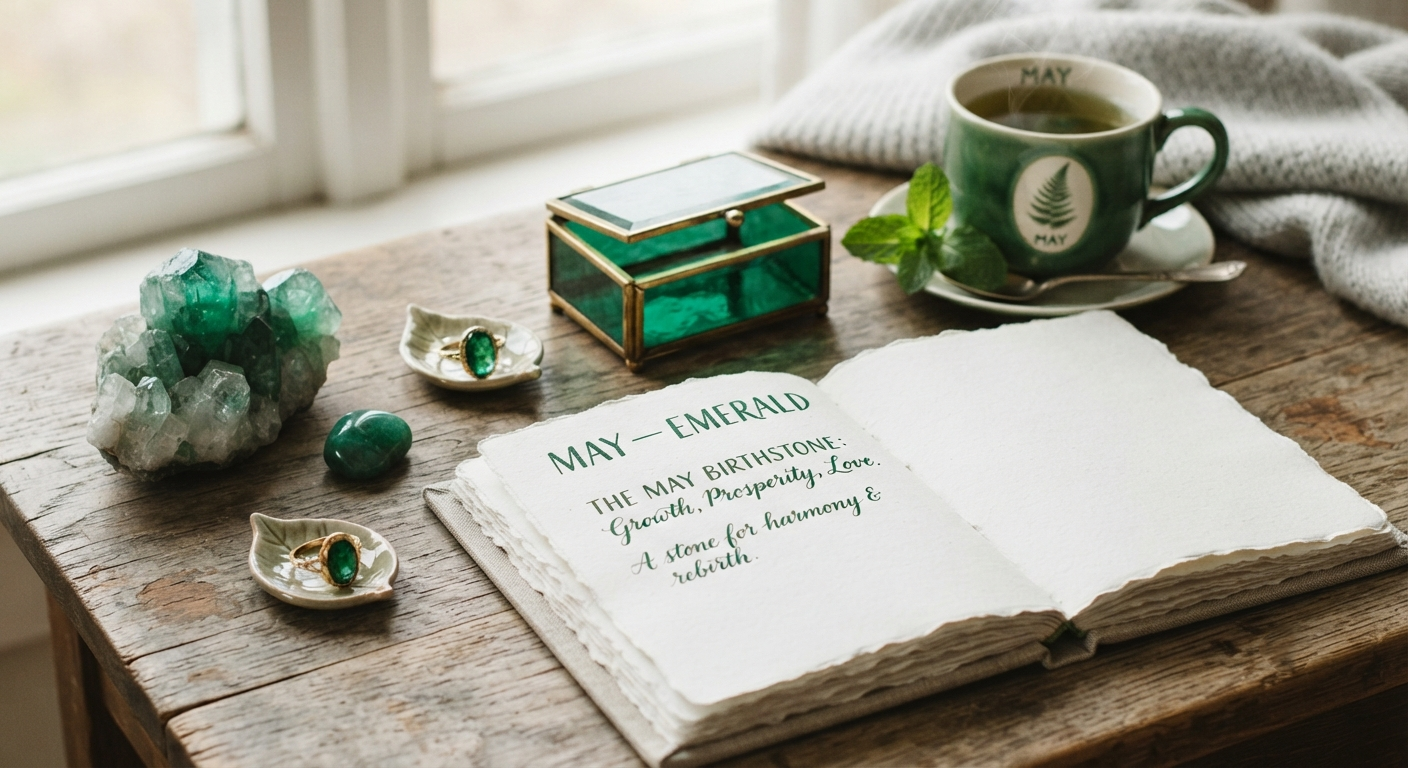
Emerald’s name descends from the Greek smaragdos, simply meaning “green stone.” Its signature color comes from trace amounts of chromium and vanadium, and the finest stones display an intense, velvety green often compared to spring itself.
Colombia remains the benchmark source for emerald, with Zambia and Brazil as significant modern producers.
Emerald Stone Meaning and Symbolism
Emerald has been associated with rebirth and renewal since ancient Egypt, where it was linked to the goddess Isis and buried with pharaohs as a symbol of eternal youth. Its lush green color ties it naturally to growth, fertility, and the arrival of spring. In more modern tradition, emerald is worn as a stone of loyalty and honesty in relationships, believed to strengthen love and foresight in equal measure.
June — Pearl, Alexandrite & Moonstone
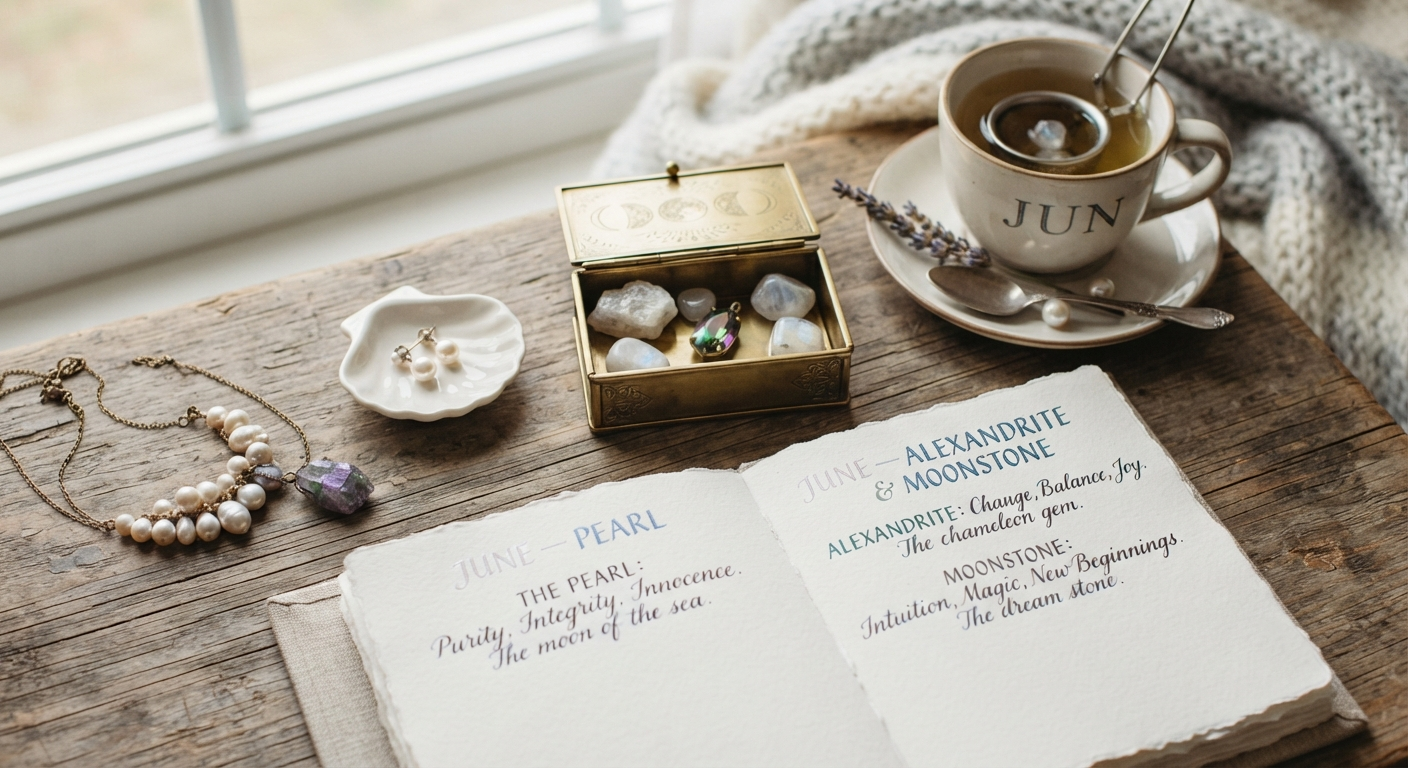
Unlike most birthstones, pearl is organic — formed inside mollusks rather than mined from the earth, making it a symbol of purity and innocence for centuries. Natural pearls are exceedingly rare today; most pearls sold are cultured, meaning the process was human-initiated but the pearl itself still grows naturally inside the oyster.
Alexandrite, June’s rarer alternative, is famous for changing color from green in daylight to red under incandescent light. Moonstone, the third option, displays a soft glow called adularescence, historically linked in South Asia to lunar energy.
Pearl, Alexandrite & Moonstone Meaning and Symbolism
Pearl has symbolized purity, innocence, and integrity for thousands of years, often given as a gift to mark new beginnings such as weddings. Alexandrite’s dramatic color change earned it a reputation as a stone of balance between opposites — joy and seriousness, intellect and emotion. Moonstone, tied to lunar cycles in Indian and Sri Lankan tradition, is worn as a symbol of intuition, emotional balance, and new beginnings, especially for those going through change.
July — Ruby
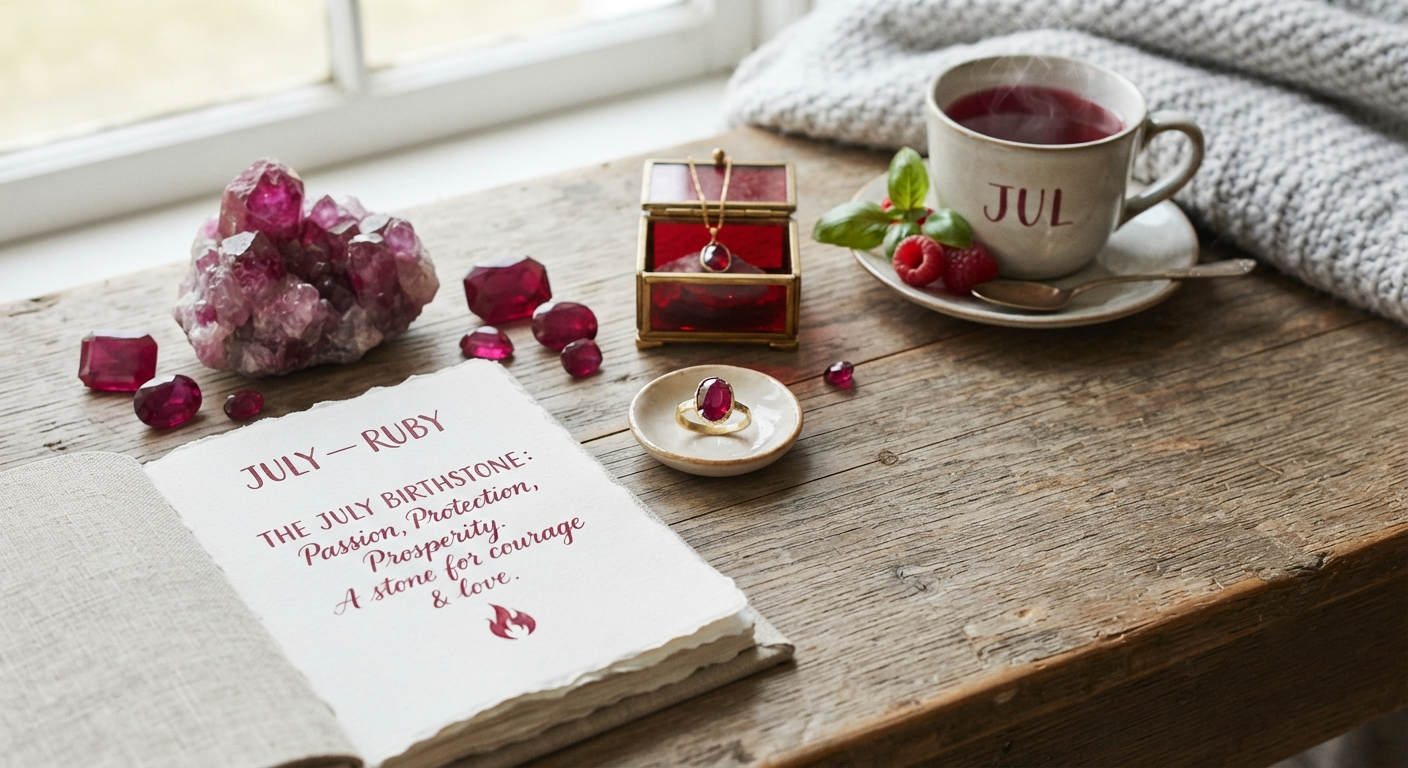
Ruby’s name comes from the Latin ruber, meaning “red.” The finest rubies show a vivid, saturated red often called “pigeon’s blood” in the trade, and the best examples fluoresce strongly under ultraviolet light, adding to their glow in daylight.
Myanmar has produced history’s most celebrated rubies, with Mozambique, Madagascar, and Thailand as major sources today.
Ruby Stone Meaning and Symbolism
Known in Sanskrit as ratnaraj, “king of precious gems,” ruby has been worn for centuries as a stone of passion, protection, and power. Ancient warriors were said to embed rubies into their armor believing the stone would grant courage on the battlefield. Its vivid red has made it an enduring symbol of love and vitality, worn today as a reminder of confidence, ambition, and deep emotional connection.
August — Peridot & Spinel
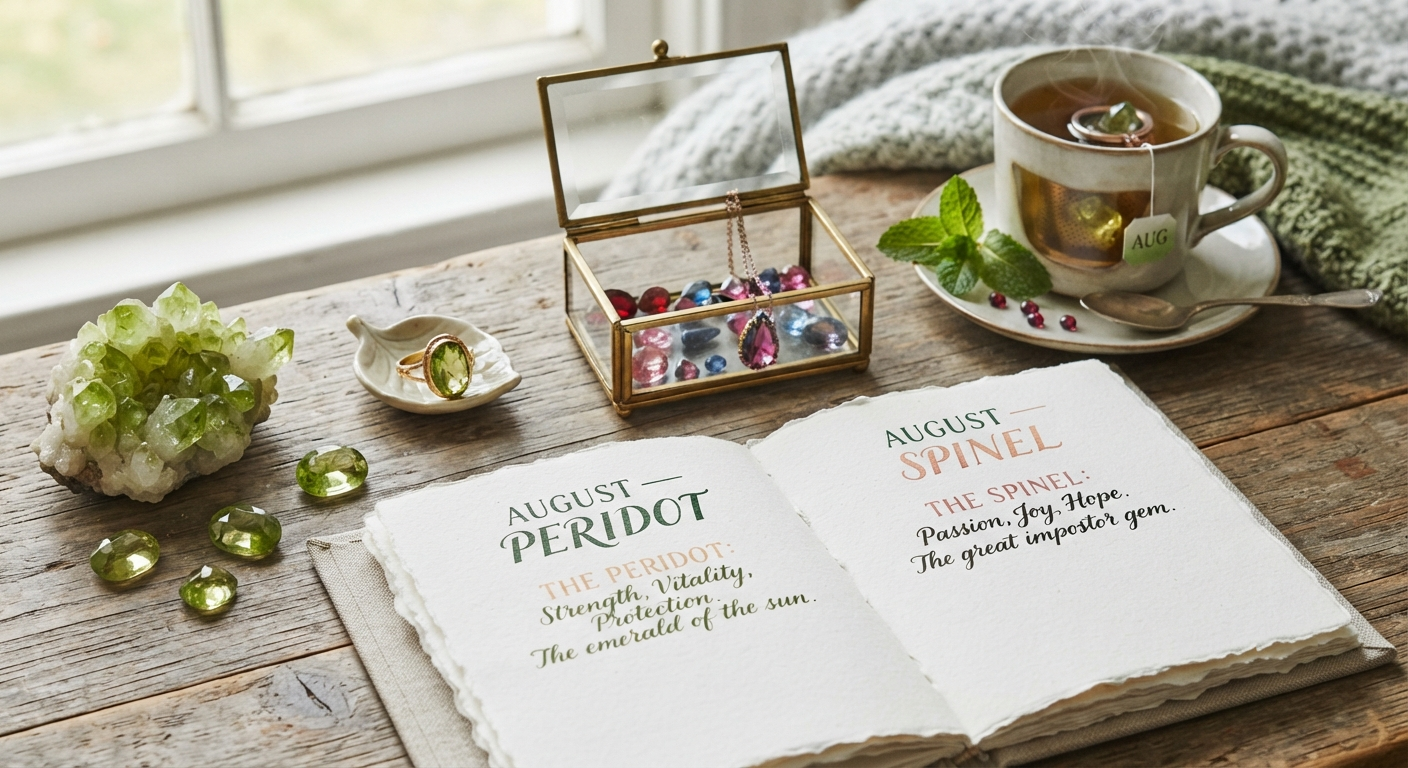
Peridot is one of the few gems that forms deep within the Earth’s mantle and is carried to the surface by volcanic activity, giving it a distinctive olive-green color prized since ancient Egypt.
Spinel, added to the August lineup in 2016, was mistaken for ruby and sapphire for centuries due to its similar rich colors — many “rubies” in royal crown jewels have since been reclassified as spinel.
Peridot & Spinel Meaning and Symbolism
Ancient Egyptians called peridot the “gem of the sun,” believing it captured sunlight and protected the wearer from nighttime fears and negative energy. It has long been associated with strength, healing, and renewal. Spinel, historically overshadowed by ruby despite its own beauty, has more recently come to symbolize resilience and hidden value — a gem finally recognized for what it always was.
September — Sapphire
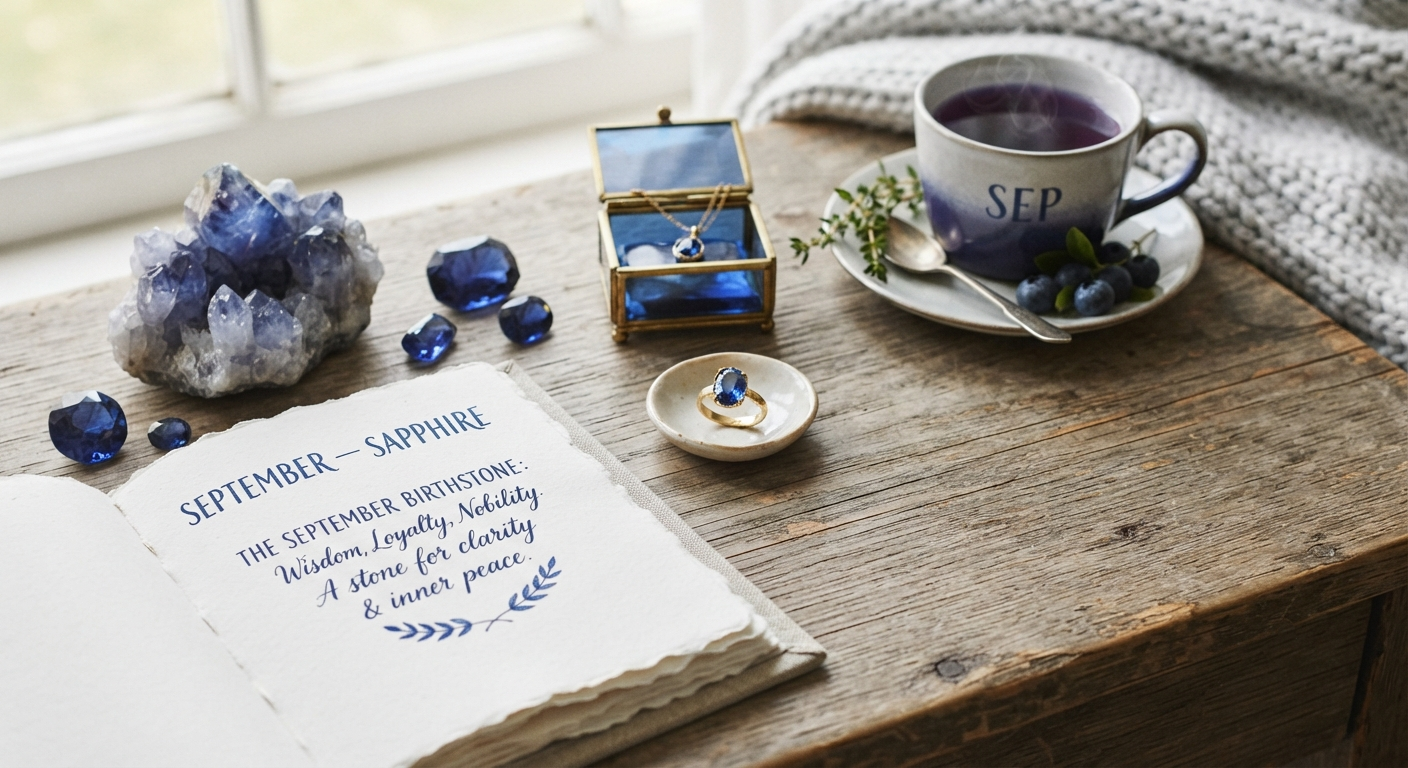
Sapphire is best known for its deep blue, though it occurs in every color except red — those variants are simply called “fancy sapphires.” Its name likely comes from the Latin sapphirus, referring to blue stones broadly.
Kashmir, Sri Lanka, and Myanmar have historically produced the world’s finest sapphires, with Madagascar a major modern source.
Sapphire Stone Meaning and Symbolism
Sapphire has long been worn by royalty and clergy as a symbol of wisdom, virtue, and divine favor — medieval kings believed it protected them from harm and envy. Its calm blue color is associated with loyalty, sincerity, and clarity of thought, which is why it has remained a popular choice for engagement rings meant to symbolize trust and faithfulness. It’s also considered a stone of focus, believed to bring mental discipline to the wearer.
October — Opal & Tourmaline
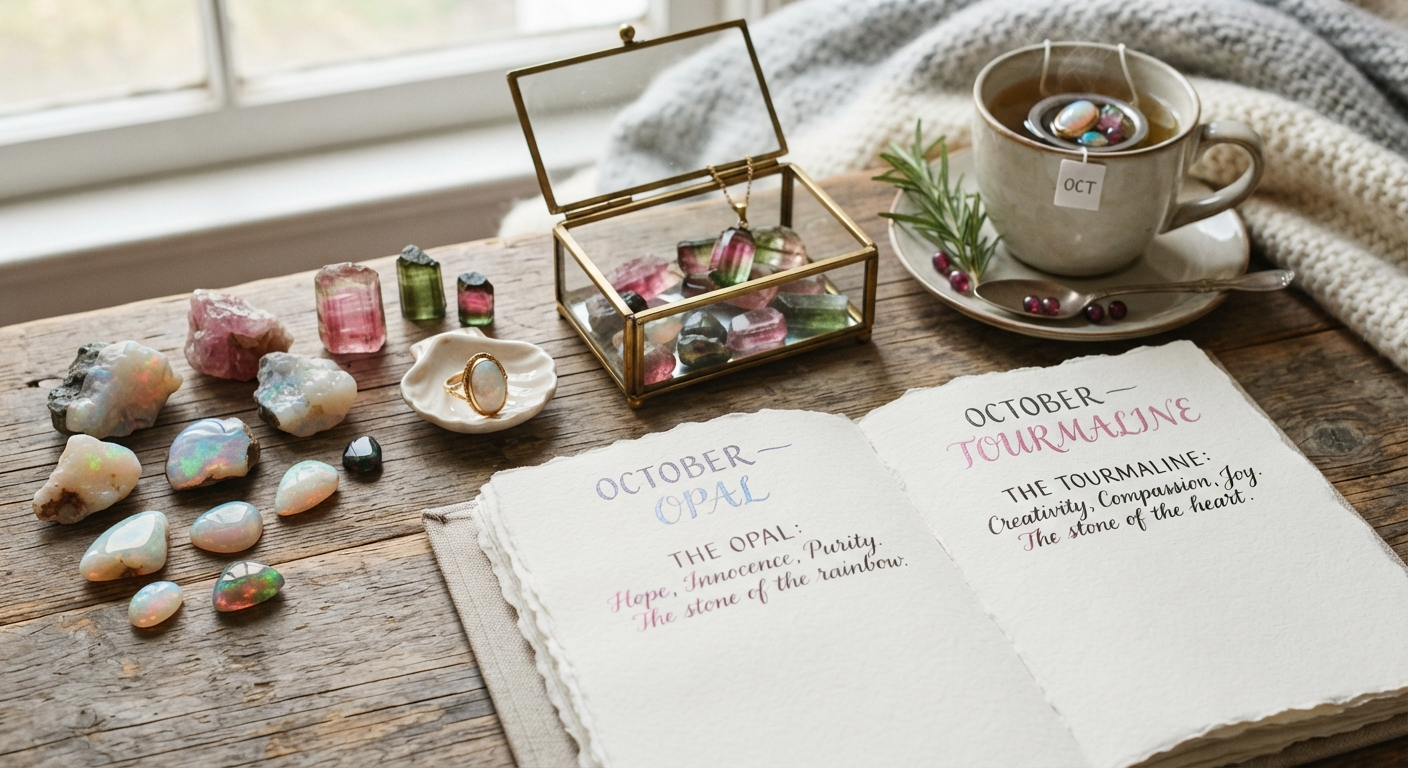
Opal is unique among gemstones for its play-of-color — flashes of rainbow hues caused by microscopic silica spheres bending light. Australia produces the vast majority of the world’s fine opal.
Tourmaline, October’s second stone, comes in more colors than almost any other gem, sometimes within a single crystal. Brazil and East Africa are key sources.
Opal & Tourmaline Meaning and Symbolism
Opal’s shifting colors have made it a symbol of hope, creativity, and spontaneity, with ancient Romans considering it a sign of good fortune and the Bedouins believing it fell from the sky during lightning storms. Tourmaline, prized for its wide range of colors, is associated with emotional balance and self-expression — different colors were traditionally believed to influence different aspects of the wearer’s emotional life, from calm to passion to compassion.
November — Topaz & Citrine
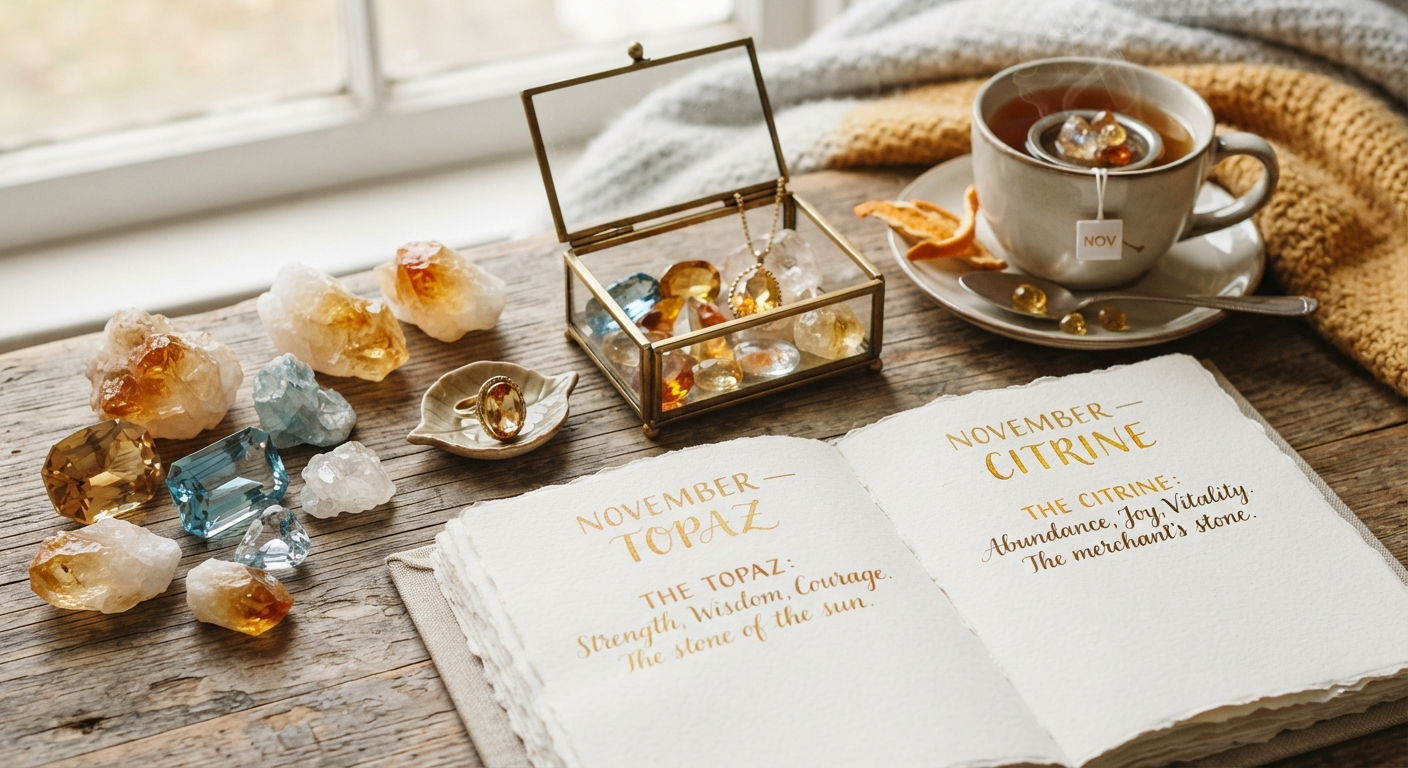
Topaz occurs naturally in shades from clear to blue to a rare and prized golden-orange called imperial topaz, historically sourced from Brazil’s Ouro Preto region.
Citrine, its birthstone companion, owes its warm yellow-to-amber color to trace iron and is often created by heat-treating amethyst.
Topaz & Citrine Meaning and Symbolism
Ancient Greeks believed topaz could increase strength and make its wearer invisible in times of emergency, and it has long been associated with confidence, healing, and good fortune. Citrine’s sunny color earned it the nickname “the merchant’s stone,” historically kept in cash registers and business tills in the belief that it attracted wealth and success. Both stones are worn today as symbols of warmth, optimism, and abundance heading into the year’s final months.
December — Turquoise, Zircon & Tanzanite

Turquoise, one of the oldest gemstones known to civilization, has been mined in Iran and the American Southwest for thousands of years and prized for its sky-blue color.
Zircon, often confused with synthetic cubic zirconia despite being a completely natural gem, offers exceptional brilliance in blue, gold, and colorless varieties. Tanzanite, the most recent addition to the list, was discovered only in 1967 near Mount Kilimanjaro.
Turquoise, Zircon & Tanzanite Meaning and Symbolism
Turquoise has been treasured across Egyptian, Persian, and Native American cultures alike as a stone of protection, healing, and good fortune, often carved into amulets meant to guard the wearer from harm. Zircon has historically symbolized honor, wisdom, and prosperity, once believed to promote restful sleep and ward off bad dreams. Tanzanite, despite being the newest of the three, has quickly become associated with transformation and spiritual growth — fitting for a stone discovered only decades ago and found nowhere else on Earth.
Published by Arun Moudgil on 05 August 2026