This article will help you understand the differences between real and fake Rudraksha beads, and how professional Rudraksha certification is the best way to confirm authenticity.
Rudraksha beads have been venerated for centuries as a symbol of spiritual significance, healing properties and a cut above the rest because of their association with Lord Shiva. With the popularity of Rudraksha, the market has also seen a proliferation of fake and artificially altered beads. For a buyer, it can be difficult to differentiate between a genuine Rudraksha and a fake Rudraksha.
What Is A Real Rudraksha?
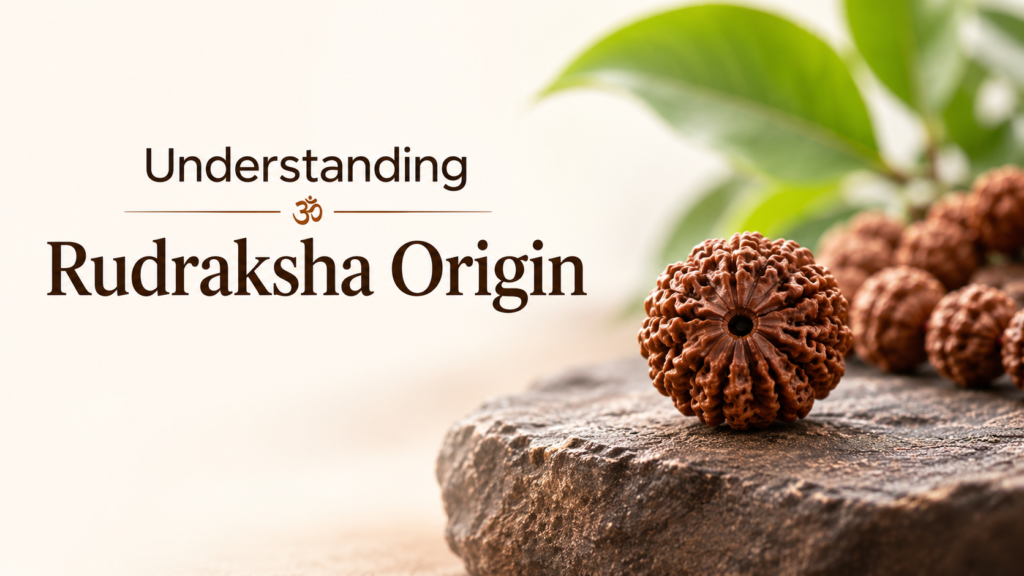
A pure embodiment of the sacred Rudraksha seed is harvested from the *Elaeocarpus ganitrus* tree. Every bead has naturally occurring lines or divisions called “Mukhis”, which are key to identifying the type of Rudraksha and its spiritual value.
Real Rudraksha beads have nature’s awe-inspiring unique qualities, which include:
* Naturally occurring mukhi lines from one end to the other
* Naturally textured surface and indentations
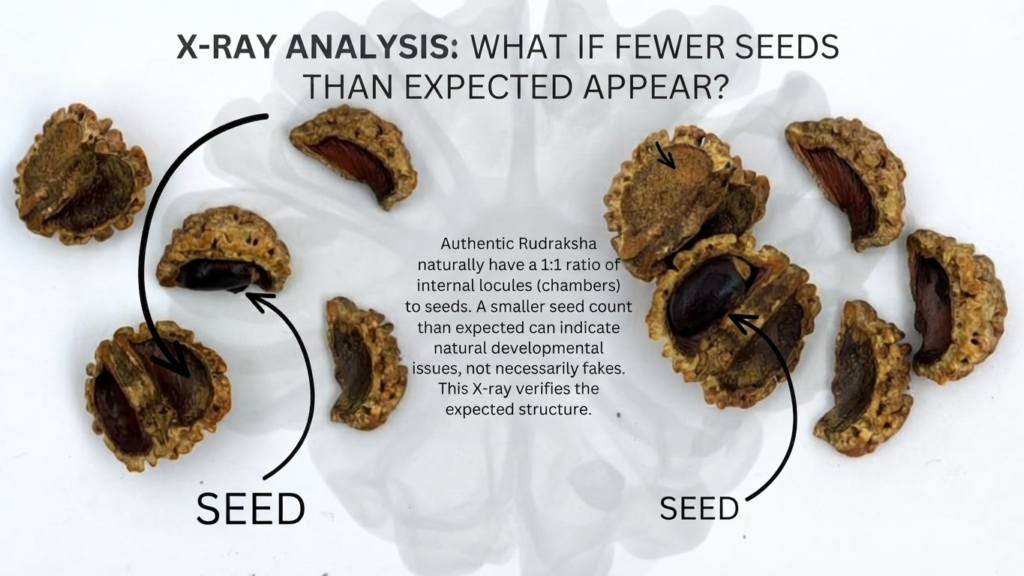
* Naturally occurring internal seed compartment divisions that match the mukhi number
* No artificial carving or filling
Why Do Fake Rudraksha Beads Get Sold In The Market?
Sought-after varieties of Rudraksha, like 1 Mukhi, 2 Mukhi and Gauri Shankar Rudraksha, are so valuable that there are numerous fake Rudraksha beads in circulation.
Reasons for faking Rudraksha beads include:
* Higher margins for sellers
* More premium Rudraksha demand
* Buyers often don’t know
* Visual inspection is not easy
How to Identify Real Rudraksha?
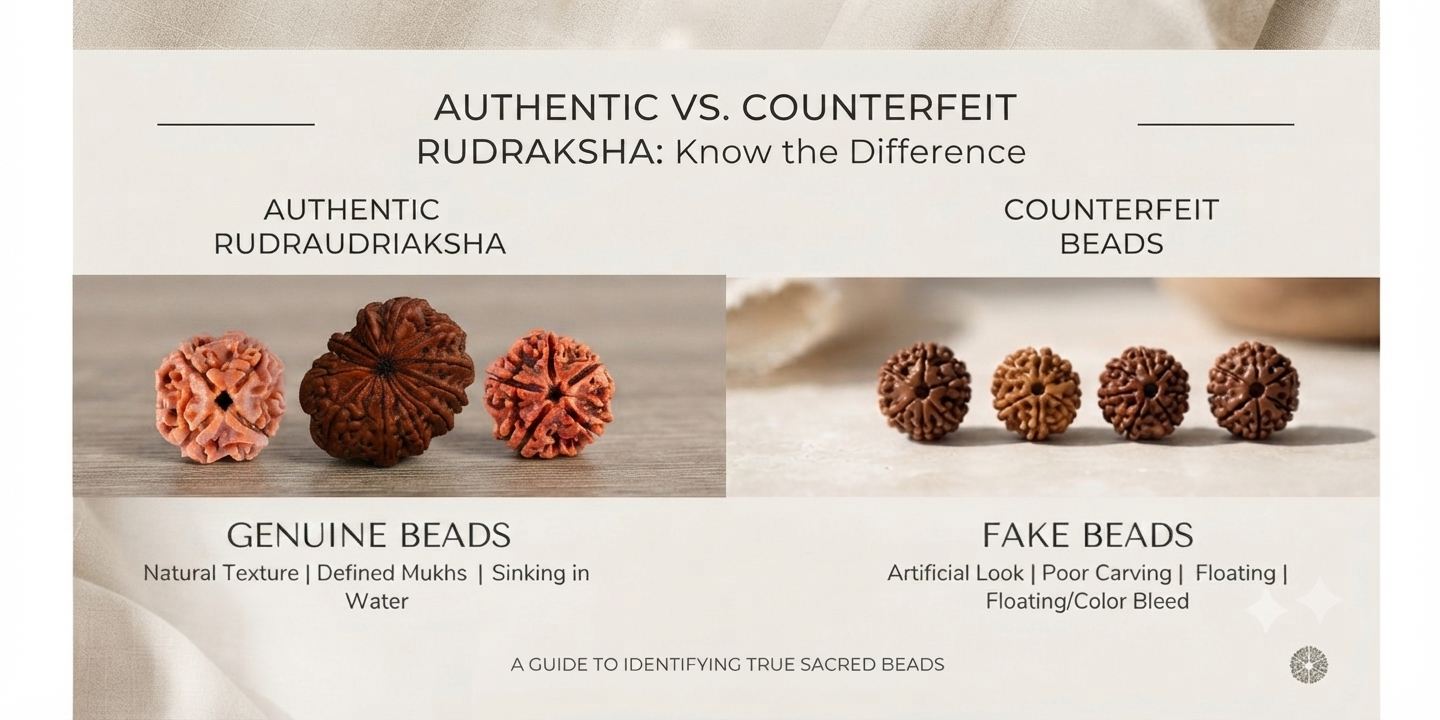
Look at the Mukhi: The mukhi should have a clear path from top to bottom of the bead. Artificially carved mukhi can be choppy or too sharp.
Look at the Texture: All natural Rudraksha have grooves and imperfections, a perfectly smooth or symmetrical bead is a red flag.
Look for Alteration: Look carefully at the bead, maybe at 10-20X magnification. Signs for fake can be:
* Tool marks
* Glue
* Filled cracks
* Artificial cuts
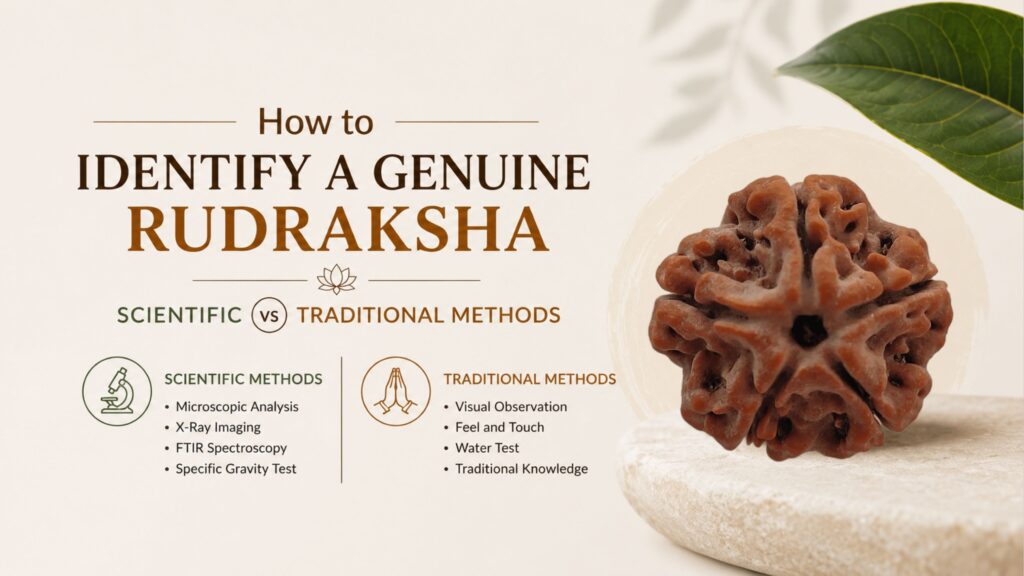
Debunk Popular Myths: A plethora of Rudraksha testing methods are available online such as:
- Water test
- Milk test
- Float test
- Copper coin test
These methods are not scientifically sound and do not provide reliable evidence of Rudraksha authenticity.
Common Types of Fake Rudraksha
1. Artificially Carved Rudraksha: In this type of scam, a lower mukhi is carved to look like a higher mukhi one.
2. Glued or Joined Rudraksha: Two or more Rudraksha can be glued together to make a higher mukhi, as in for example a Gauri Shankar Rudraksha.
3. Molded or Resin Replicas: Some fake Rudraksha are hand-made from wood, resin, plastic or something similar and colored like a real Rudraksha does.
4. Chemically Treated Rudraksha: Actually there are a few Rudraksha that have been chemically treated to look more natural or to hide flaws.
Rudraksha Certification
A certificate can provide the following benefits:
- Authenticity confirmation
- Mukhi count approval
- Artificial changes discovered
- Increased buyer confidence
- Better resale and collection value
Be it a single Rudraksha or a collection overall, certified Rudrakshas help maintain your investment and collection confidence.
Importance of Laboratory Testing
A visual examination may fail to identify dyeing, untwisting, polymer coatings, or artificial cuts. A professional laboratory testing can provide a scientific assessment of originality and authenticity.
A registered Rudraksha testing lab can perform the following tests:
- Natural origin
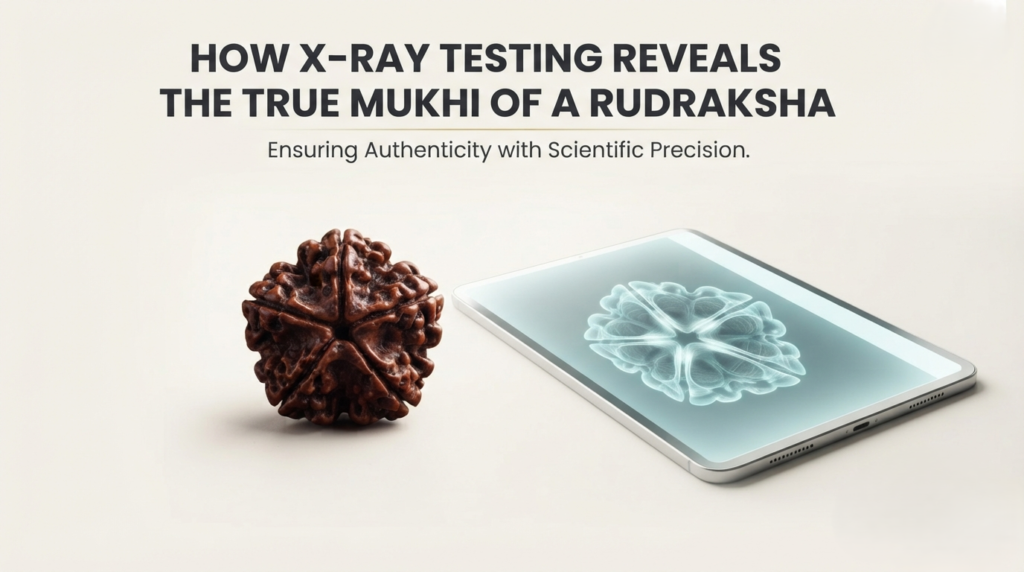
- Mukhi test
- Internal structure
- Artificial manipulation
- Surface treatment
- Real authenticity
A laboratory certification helps provide buyers with a documented and verified assessment and invest with confidence.
Professional Rudraksha Testing
We at Rudrakshala Laboratories offer independent Rudraksha testing and certification services based on scientific assessment and professional gemological ratio.
Our assessment is conducted by Graduate Gemologists (IIGJ) following established testing steps for authenticity and any signs of dyeing, polymer coating and artificial cutting.
Published by Arun Moudgil on 12 January 2026