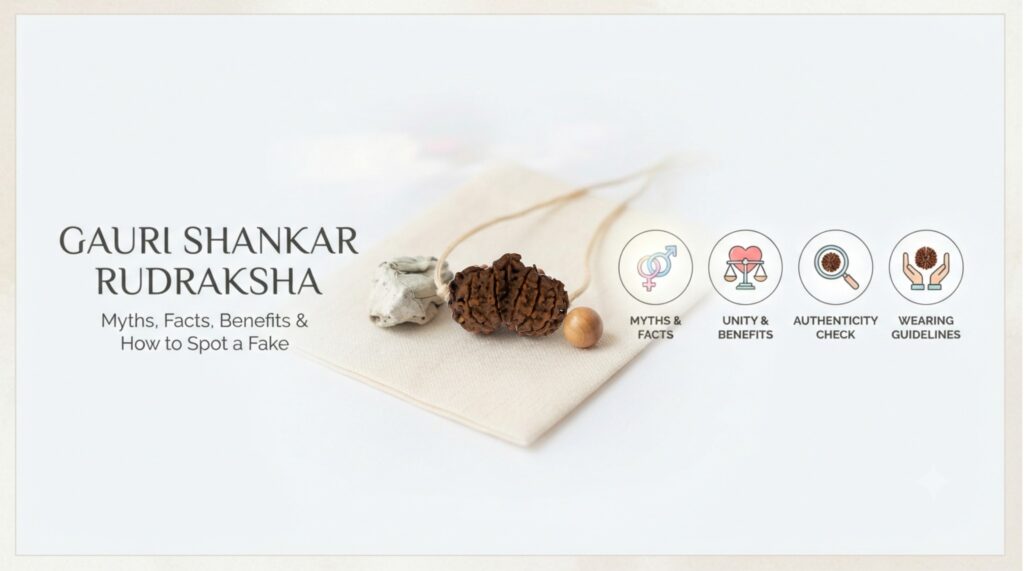
If you’ve ever browsed a rudraksha collection, you’ve probably noticed one bead that looks different from all the rest — two lobes fused together into a single, natural seed. This is the Gauri Shankar Rudraksha, one of the most sought-after and most counterfeited beads in the rudraksha world. Whether you already own one (or two, like many collectors) or are just curious about what makes this bead special, here’s a complete guide.
What Is a Gauri Shankar Rudraksha?
A Gauri Shankar Rudraksha is a naturally conjoined rudraksha bead — two seeds fused together during growth on the Elaeocarpus ganitrus tree, rather than separated into individual beads. The larger lobe is traditionally associated with Shiva (“Shankar”) and the smaller lobe with Parvati (“Gauri”), which is where the bead gets its name. Because this fusion happens naturally and isn’t something that can be manufactured on demand, genuine Gauri Shankar beads are relatively rare compared to standard single-lobed rudraksha.
Traditional Benefits (As Understood in Practice)
According to Vedic and yogic tradition, the Gauri Shankar Rudraksha is associated with:
- Harmony in relationships — symbolizing the union of Shiva and Shakti, it’s traditionally worn by couples or individuals seeking balanced, stable relationships
- Inner balance — representing the union of masculine and feminine energy within a person
- Family unity — often kept in homes or worn to encourage peace within the household
- Meditation support — like other rudraksha, used by some practitioners as a focus object during meditation and japa (mantra repetition).
Myth vs. Fact
Myth: Every double-lobed bead is a “real” Gauri Shankar. Fact: Two beads glued or tied together is not the same as a naturally fused bead. A genuine Gauri Shankar has continuous, unbroken surface texture and mukhi (line) patterns flowing across the join, because it grew that way. This is one of the most common points of confusion for buyers.
Myth: The bead guarantees instant marital harmony or relationship success. Fact: In Hindu tradition, the Gauri Shankar Rudraksha is worn as a symbol of union — representing Shiva and Parvati together — and is associated with harmony, partnership, and balance between masculine and feminine energies. These are spiritual and symbolic associations rooted in devotional practice, not scientifically verified outcomes. Traditions around rudraksha are a matter of faith and belief, and it’s worth holding these claims with that context rather than as medical or guaranteed results.
Myth: Darker beads are always older, more “powerful,” or more valuable. Fact: Color in rudraksha beads varies naturally based on the tree, the region it grew in, sun and soil exposure, how the bead was processed after harvesting, and later, how much it’s been oiled or worn against skin. A light brown and a dark brown bead can be equally genuine and equally old — color by itself tells you very little about authenticity or age. Over time, oiling and regular wear will often darken a bead that started out lighter.
Myth: Rudraksha beads work purely because of chemical or electromagnetic properties. Fact: Some sellers cite “scientific” claims about electromagnetic or bioelectric effects of rudraksha to sell beads. These claims are not well-supported by mainstream scientific research. The bead’s significance is primarily spiritual and cultural, within Hindu and yogic tradition — that’s a valid and long-standing basis for wearing one, without needing to lean on unproven scientific framing.
X-Ray Analysis
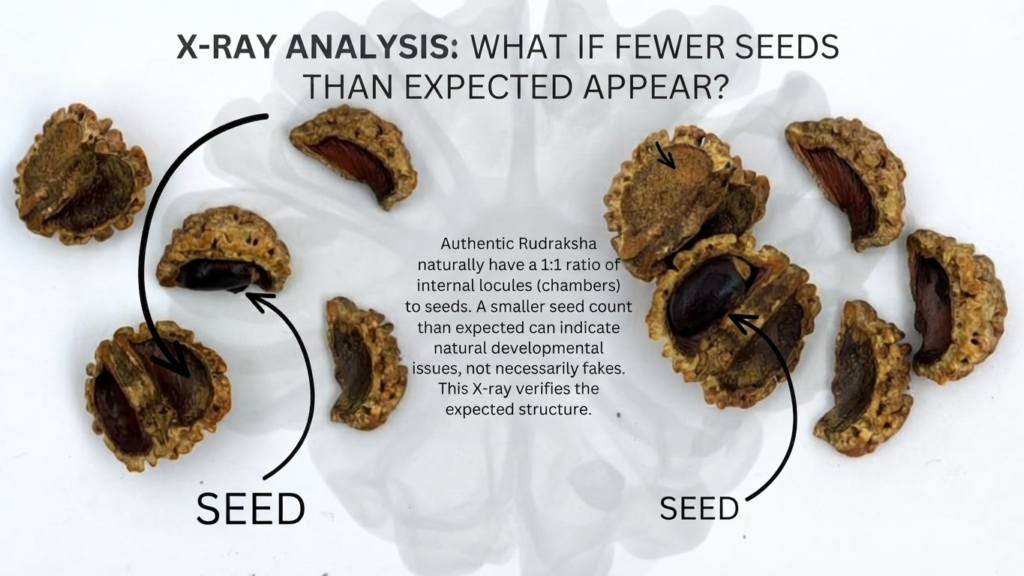
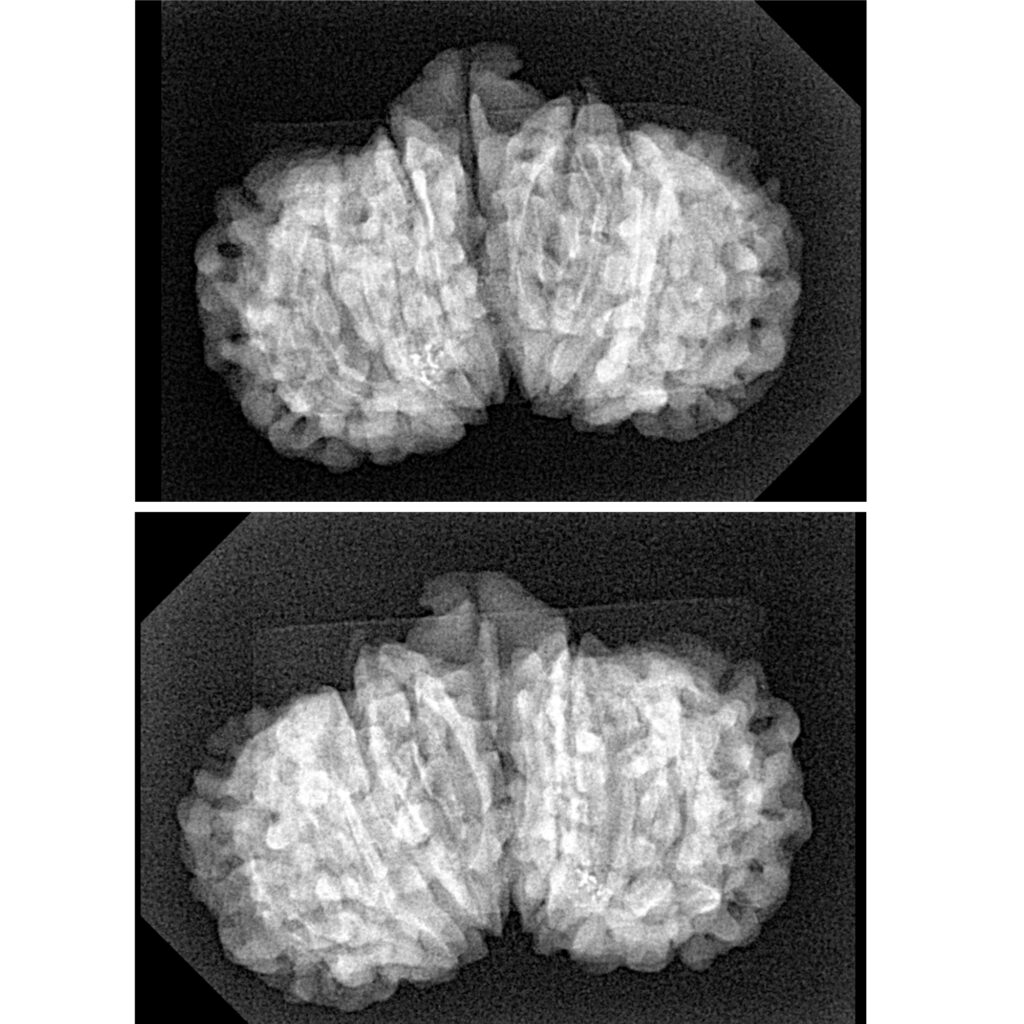
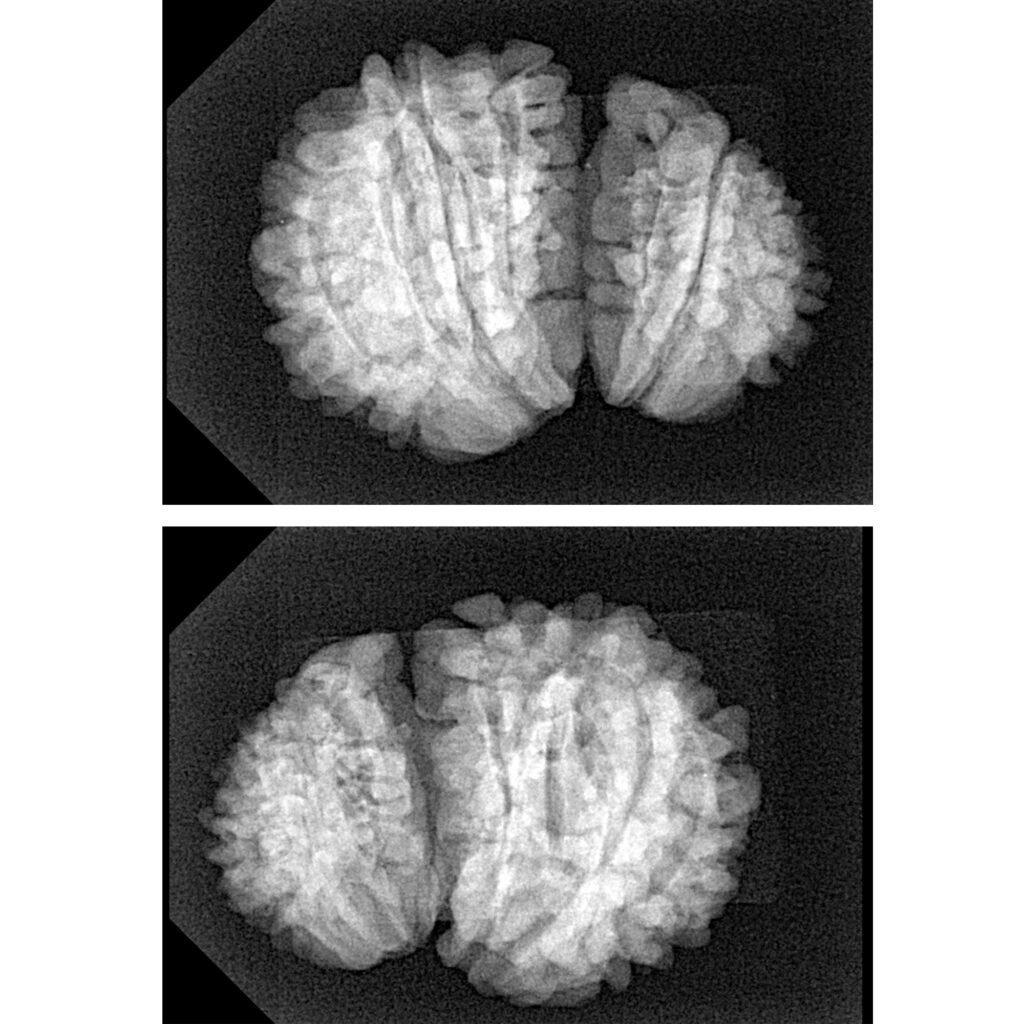
One of the most interesting ways to study Rudraksha is through X-ray imaging.
What Does the X-Ray Reveal?
The X-ray images show several interesting characteristics.
1. Two Separate Natural Seeds
Both Rudraksha beads clearly consist of:
- Two individual seed bodies
- Naturally attached during growth
This is the defining feature of a genuine Gauri Shankar Rudraksha.
2. Internal Compartments
The internal chambers correspond with the external Mukhis.
This indicates:
- Natural formation
- No artificial carving
- No resin filling
3. Natural Core Structure
The X-rays show:
- Continuous natural fibers
- Organic seed structure
- No visible glue layer
- No metal pins
- No drilled internal support
This strongly supports that the beads are naturally formed.
Real vs. Fake: How to Tell
This is where things get practical — and where your X-rays are genuinely useful.
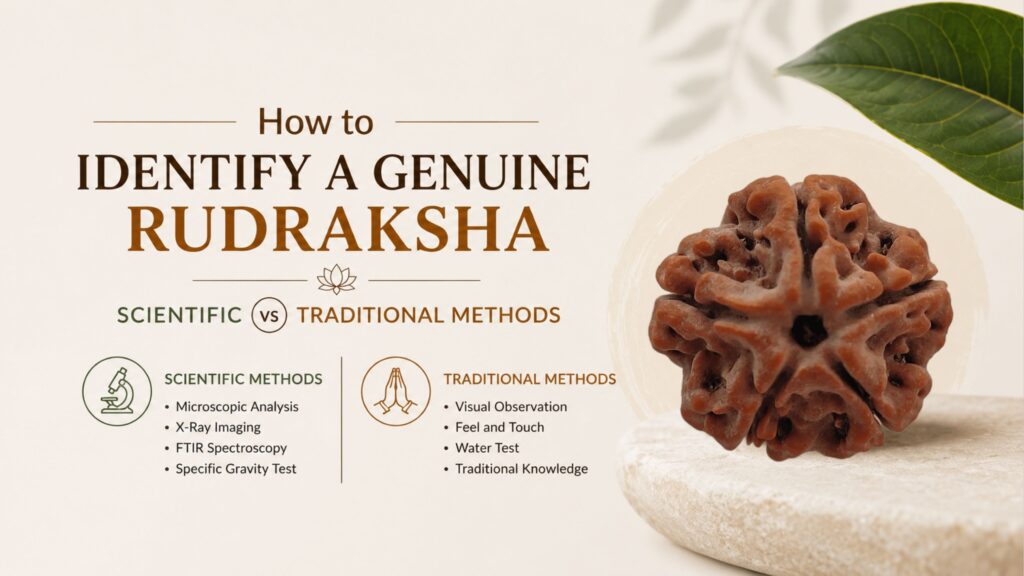
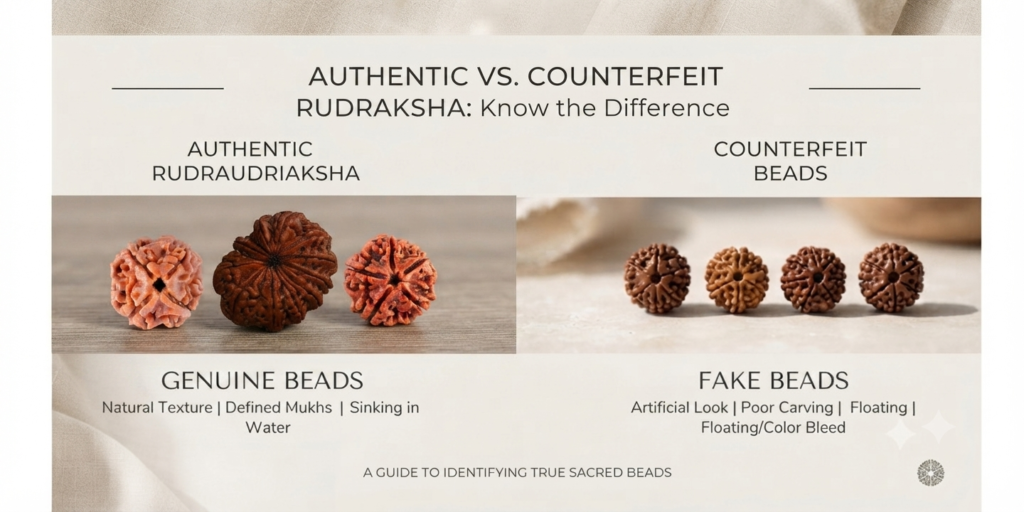
- Natural fusion vs. glued beads A real Gauri Shankar grew as one seed. Under close visual inspection, the surface texture, ridges (mukhi lines), and grain should flow continuously from one lobe into the other, with no seam, glue line, or abrupt texture change at the join. Fakes are often two separate beads glued or pinned together — sometimes visible as a thin gap or resin line at the joint under magnification.
- X-ray / internal structure This is one of the more reliable checks. A genuine rudraksha has a natural internal chambered structure — internal compartments (corresponding to the mukhi count) each containing a seed. In a real Gauri Shankar, an X-ray should show two separate but naturally continuous internal chamber systems, with no foreign core, no metal pin, no filler material, and no artificial cavity at the fusion point. If your X-ray shows a straight drilled channel connecting the two lobes, a visible pin, or an internal void filled with resin/adhesive, that’s a red flag for a “helped-along” fake. A CT/X-ray comparison between your two beads — checking chamber count, seed shape, and the fusion zone — is a great way to build confidence in both.
- Density and weight Genuine rudraksha beads are moderately dense and sink in plain water without floating (note: many fakes are also weighted to sink, so this alone isn’t conclusive — use it alongside other checks, not as a standalone test).
- Water absorption test A real rudraksha bead placed in lukewarm water for a short time will typically show minor natural texture under a magnifying glass rather than dissolving paint or color bleeding out. If you see dye leaching into the water, that’s a sign of an artificially colored bead.
- Consistency between the two lobes On a genuine Gauri Shankar, the “Shankar” (larger) and “Gauri” (smaller) lobes usually show similar bead-grain characteristics, since they came from the same seed. A big mismatch in surface pattern or wood grain between the two halves can suggest two different beads joined together.
- Seller documentation Reputable sellers of lab-tested rudraksha will offer a lab certificate (from organizations that test rudraksha authenticity) alongside the bead. This isn’t foolproof, but genuine sellers are generally willing to provide it.
Final Thought
The Gauri Shankar Rudraksha sits at an interesting intersection of nature, craftsmanship, and belief — a genuinely rare natural formation that has also become a magnet for imitation because of how sought-after it is. Whether you’re drawn to it for its symbolism, its rarity, or simply its story, the most useful thing you can do as an owner is separate the verifiable (structure, fusion, density) from the matters of faith (its spiritual effects) — and enjoy each on its own terms.
Published by Arun Moudgil on 31 JULY 2026